
Resources
Practical material from the community. Jump to reference architecture, diagrams, approaches or notable articles.
Reference architecture
- A reference architecture for consequential AIA pragmatic, opinionated reference architecture for generative and agentic AI where getting it wrong has serious consequences. Separates the harness, the context plane and the action plane, and places a "judgement line" above which a named human owns the output. By Oliver Cronk on Cronk Advisory, October 2026.
-
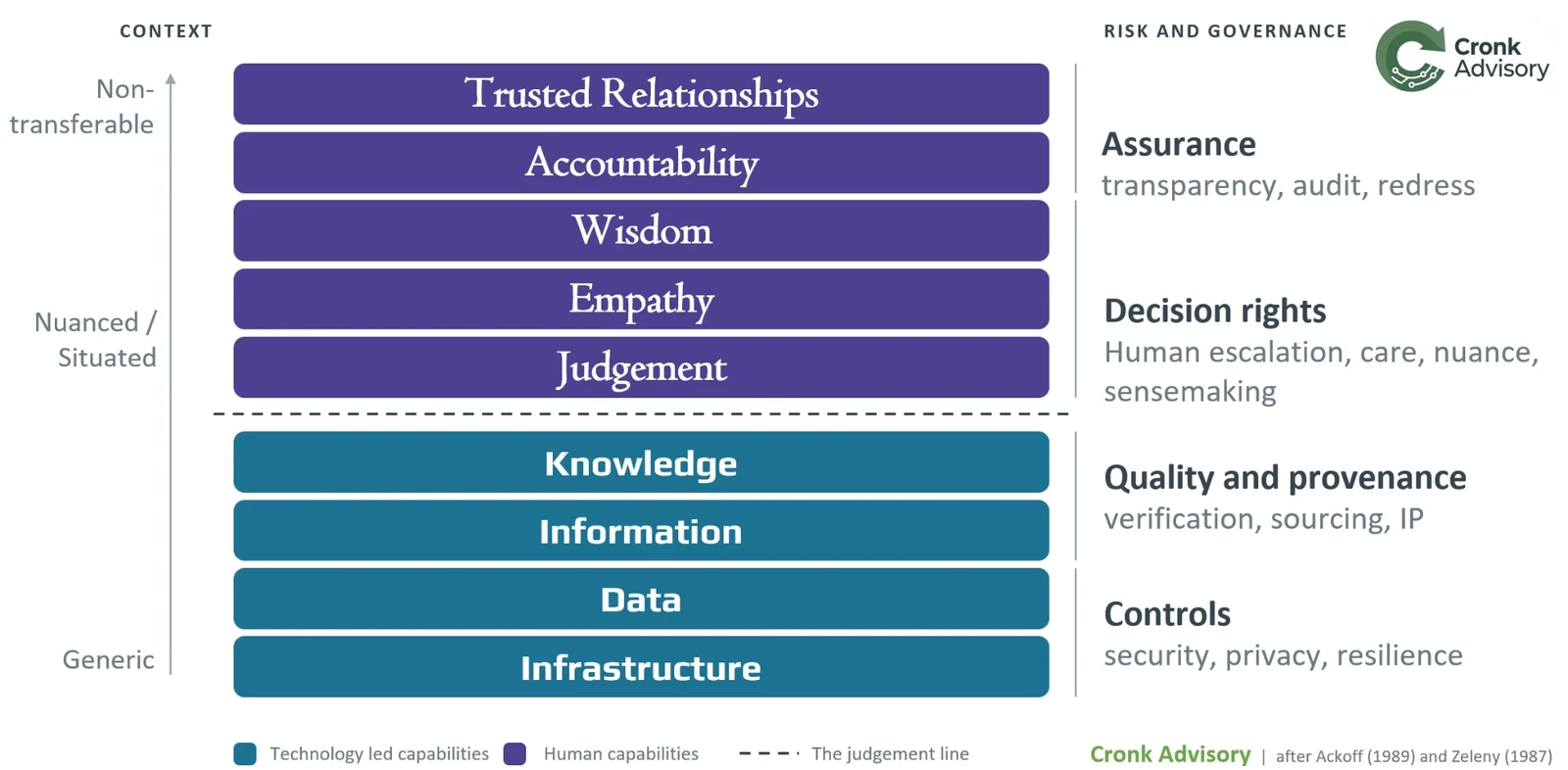
Human vs technology capabilities
The context stack and the judgement line, after Ackoff and Zeleny. Technology-led capabilities (infrastructure, data, information, knowledge) sit below the line. Human capabilities (judgement, empathy, wisdom, accountability, trusted relationships) sit above it, where a named human owns the output. Each band is paired with its risk and governance needs, from controls and provenance up to decision rights and assurance.
Open full size · Read where it comes from: Artificial intelligence is not artificial wisdom
Diagrams
-
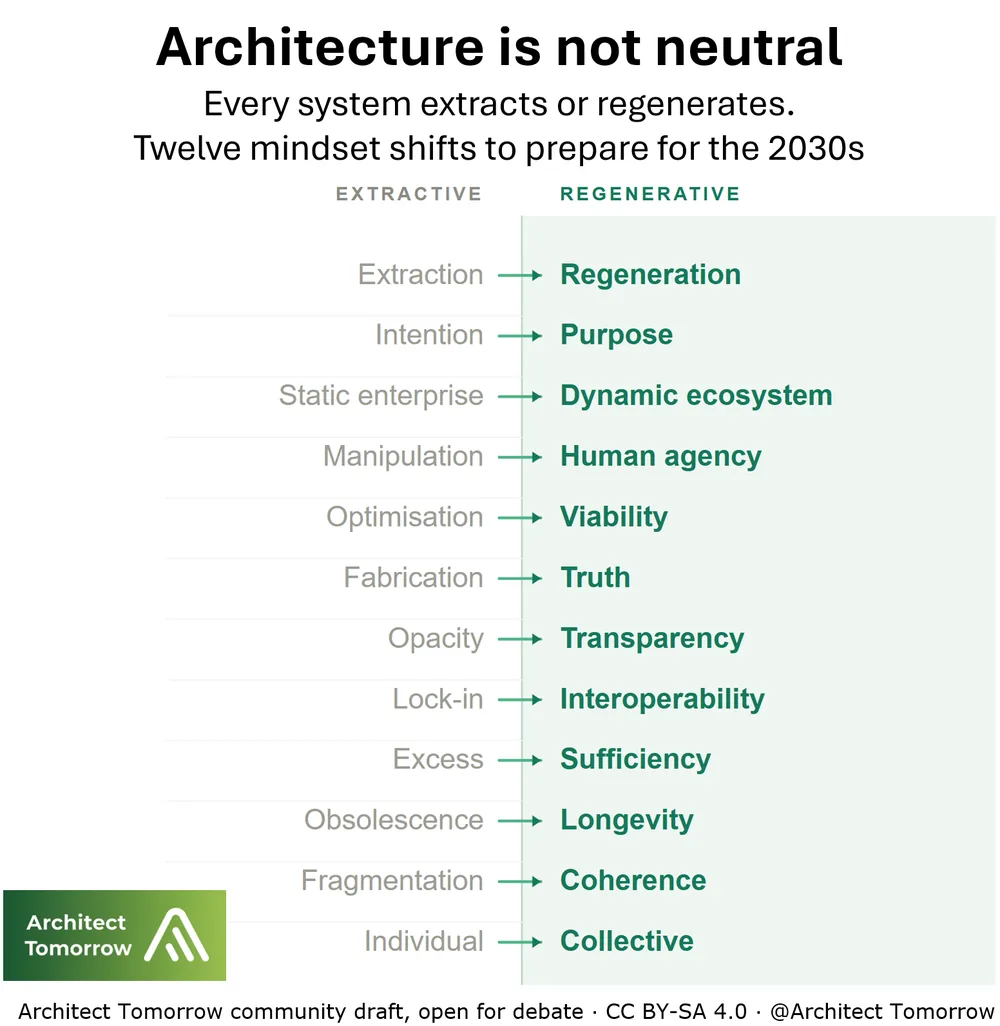
Architecture is not neutral: twelve shifts from extractive to regenerative
The Regenerative Architecture Principles on one page. Community draft, open for debate.
-
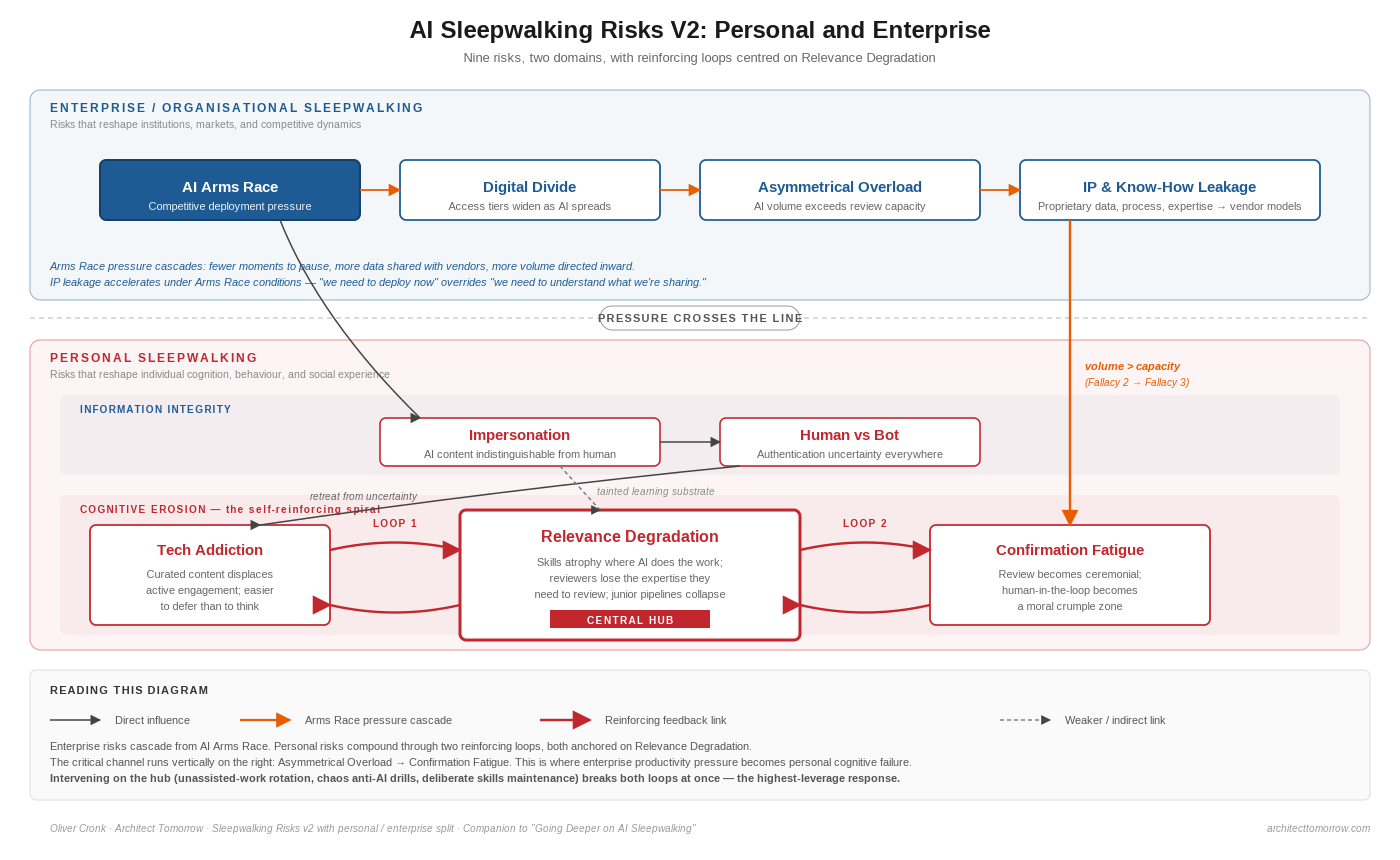
AI sleepwalking risks (v2)
Nine sleepwalking risks split into enterprise and personal, with the critical channel where asymmetrical overload becomes confirmation fatigue.
-
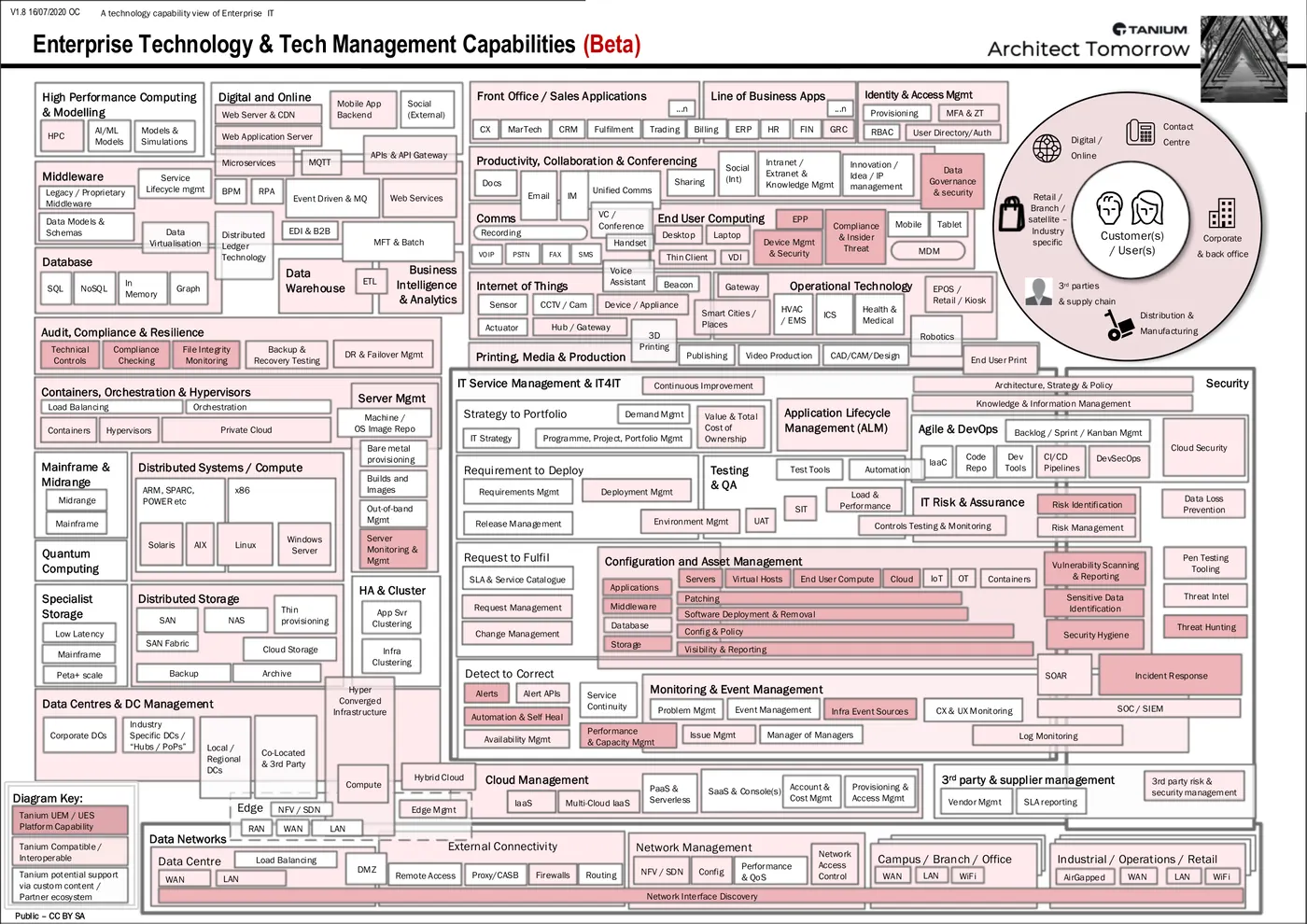
Enterprise technology and tech management capabilities (2020)
A one-page technology capability view of enterprise IT (v1.8 beta, July 2020). It maps the capabilities that serve customers and users across channels, from data centres, networks, cloud, middleware, data and end-user computing to IoT and operational technology, with IT service management (IT4IT value streams such as Strategy to Portfolio and Detect to Correct), security, risk and supplier management alongside. Produced with Tanium, whose platform coverage is shaded on the map. CC BY-SA.
-
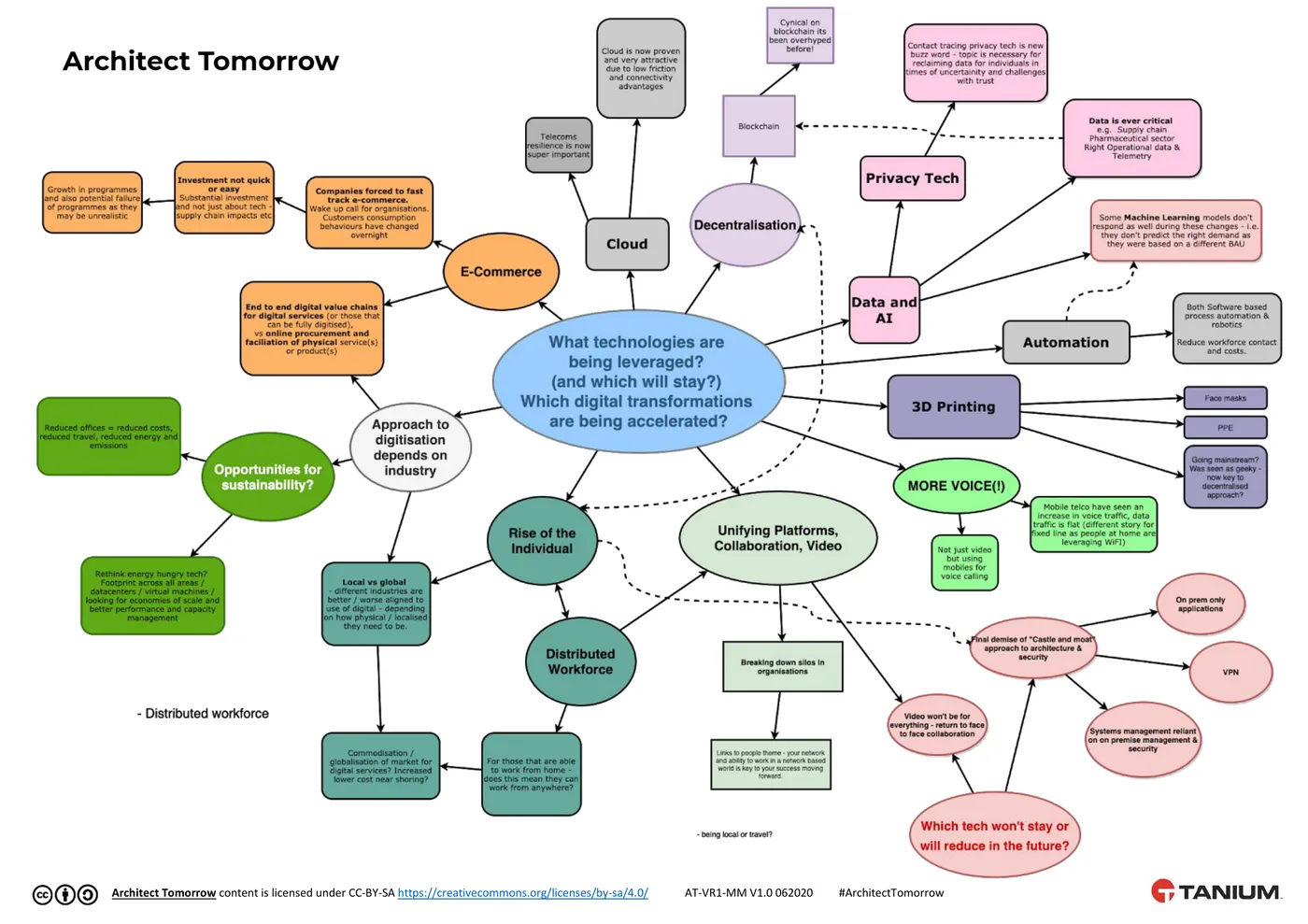
Virtual relay workshop: mapping the new realities of business and technology (2020)
Output from the community's online workshop on 24 May 2020, where three groups rotated around three topics, building on each other's mind maps to explore how priorities were shifting after COVID-19. Covers people and culture (remote working, wellbeing, climate), ecosystems and business strategy (broken supply chains, forced digitalisation, new operating models) and technology and architecture (cloud, privacy tech, automation, the end of "castle and moat" security). Moderated by Sally Pritchard, Chris Lockhart and Oliver Cronk. CC BY-SA.
Approaches and frameworks
- Pragmatic EcosystemsPragmatic systems thinking for architecture decisions. Instead of putting your organisation at the centre, it sits on a stack of business ecosystem, economy, society and biosphere, so you can ask what you rely on and what you affect. Includes an interactive map by sector. From Cronk Advisory.
- Cybernetics: a quick reference for architectsStafford Beer's 1973 systems thinking translated into architectural practice, with the key terms, laws and diagnostic questions in one place. From Cronk Advisory, October 2026.
Notable articles
- The AI Efficiency FallacyAI is sold as an efficiency play, but the technology is brute-forced and expensive, the language around it misleads, and automation erodes the human oversight that keeps it safe. On Cronk Advisory.
- Why More AI Might Ultimately Equal More PeopleAdopting AI aggressively may need more people, not fewer, or enshittification becomes a serious risk. On Cronk Advisory.
- Regenerative Architecture PrinciplesTwelve mindset shifts from extractive to regenerative architecture. A community draft (v1.0, July 2026), open for debate, with a link to the full document to suggest edits.
- AI Sleepwalking Risks V2, including Automation FallaciesThe 2026 update, with the diagram and the fallacies that drive the risks.
- Are we sleepwalking into tomorrow's AI challenges?The original 2025 article that started the thread.
More in the newsletter articles and the archive.